Independent hostel guide · updated 2026

Hostels in Argentina: a backpacker guide to 11 destinations

From Buenos Aires to Ushuaia and from Iguazú to the Quebrada de Humahuaca: hand-picked hostels in every destination, with the practical information all in one place —buses, flights, distances, money and seasons— so you can plan your trip without opening twenty tabs.

11destinations with their own guide
82hostels hand-picked one by one
≈ US$ 8dorm bed from

Backpacking Argentina: what to expect

Argentina offers backpackers a variety that's hard to match: trails that start on foot from the village in El Chaltén, mountain huts (refugios) around Bariloche, the Perito Moreno Glacier in El Calafate, colourful high-altitude hills in the Quebrada de Humahuaca, wineries by bike in Mendoza, the Iguazú rainforest and a capital you can get around by metro (subte) and on foot. Almost every destination has hostels with a shared kitchen, the simplest way to keep your daily spend down.

Distances are what shape the trip most. Buenos Aires to Bariloche is about 1,570 km by road and more than 21 hours by bus; there's no direct bus to El Calafate and the journey takes almost two days with changes, against ≈ 3 h 20 by plane. Long-distance buses leave for almost every corner of the country from the Retiro bus station and work well for one-night legs, but to cross from Patagonia to the north or to Iguazú, flying saves you whole days. Domestic flights are run by Aerolíneas Argentinas and JetSMART.

The guide is organised by destination. In each one you'll find the selected hostels with honest pros and cons, how to get there from the airport and the bus station, the bus routes with journey times and companies, what to do on your own and when it's best to go. Below you'll find the legs between destinations, three ready-made itineraries, what you need to know about money and the seasons by region.

Explore

Guides by destination

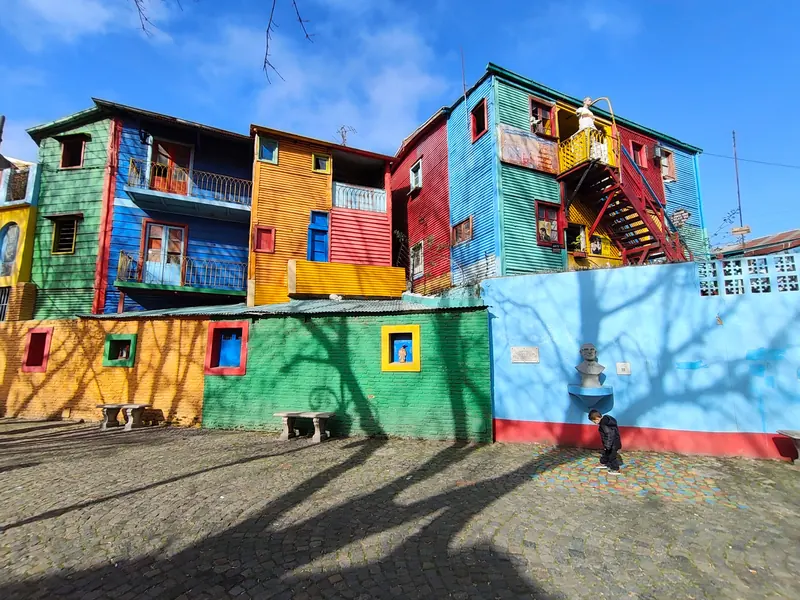
Fachadas coloridas de Caminito en La Boca bajo cielo azulBuenos AiresBeds from ≈ US$ 14

The gateway for almost every trip and the starting point for buses to Patagonia, the north and Cuyo. Hostels in Palermo, San Telmo, the centre and Recoleta, with the metro (subte) going everywhere.

See hostels and how to get there →
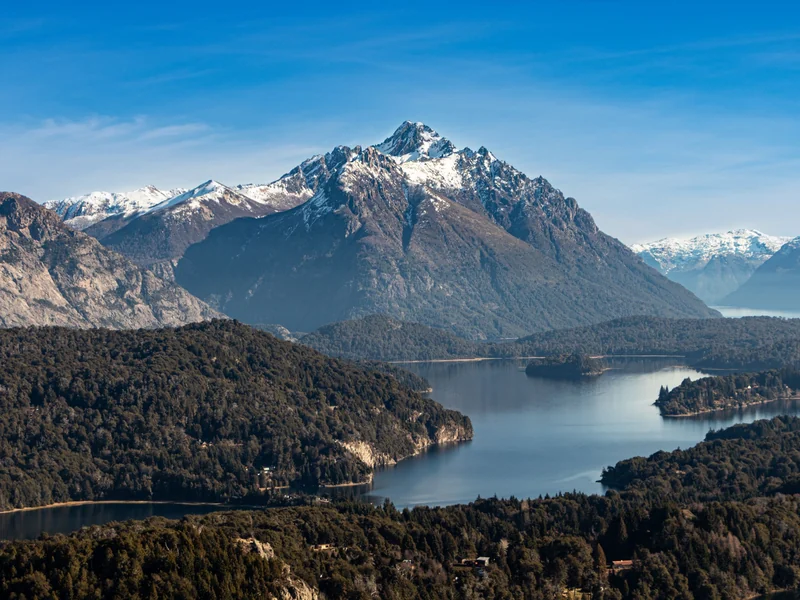
Cerro nevado sobre lagos y bosques cerca de BarilocheBarilocheBeds from ≈ US$ 12

The backpacker base of northern Patagonia, on the shores of Lake Nahuel Huapi: city buses take you to the trails to Refugio Frey, Laguna Jakob or Cerro Campanario, and in winter to Cerro Catedral.

See hostels and how to get there →
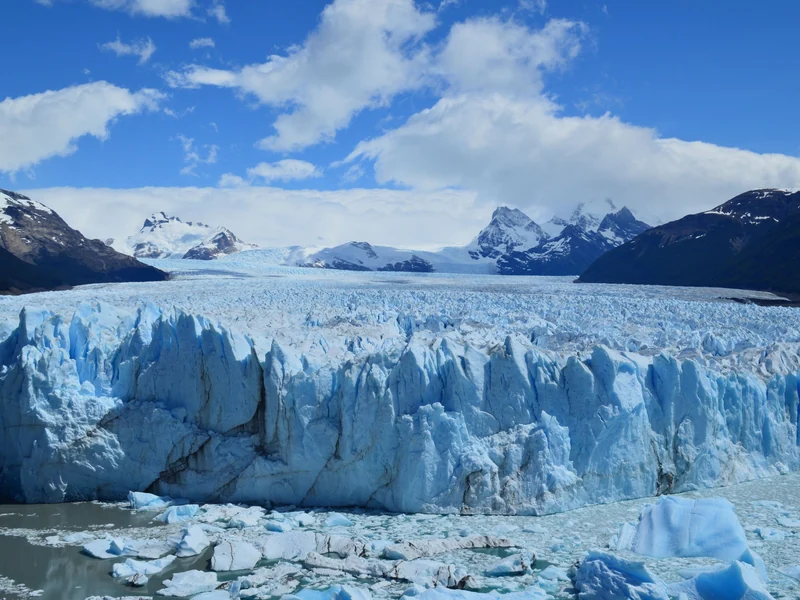
Frente de hielo del glaciar Perito Moreno sobre el Lago ArgentinoEl CalafateBeds from ≈ US$ 10

The gateway to the Perito Moreno Glacier, with direct flights from Buenos Aires and buses to El Chaltén and Puerto Natales (Torres del Paine). A small, walkable town that's expensive for Argentina.

See hostels and how to get there →
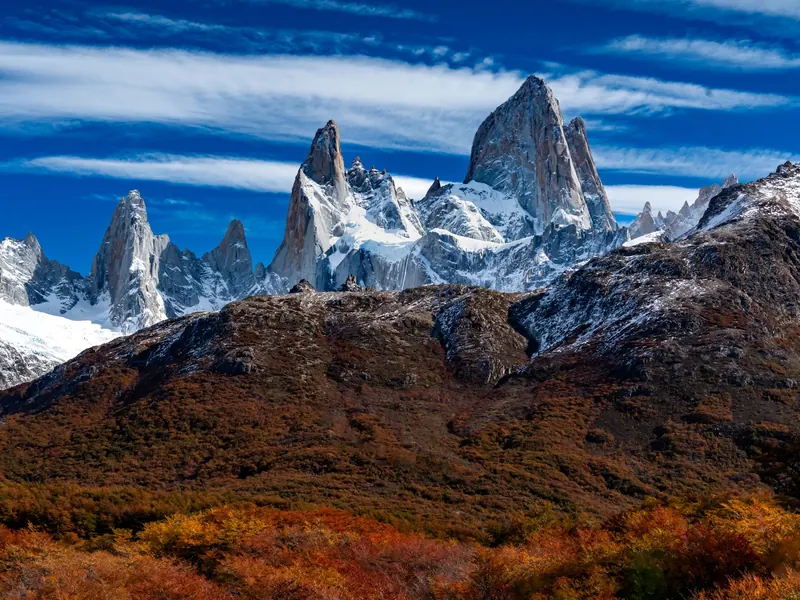
Cerro Fitz Roy sobre bosques con colores de otoño en El ChalténEl ChalténBeds from ≈ US$ 16

Argentina's National Trekking Capital: the trails to Laguna de los Tres and Laguna Torre start on foot from the village. It has just one ATM, and in winter much of the village shuts down.

See hostels and how to get there →
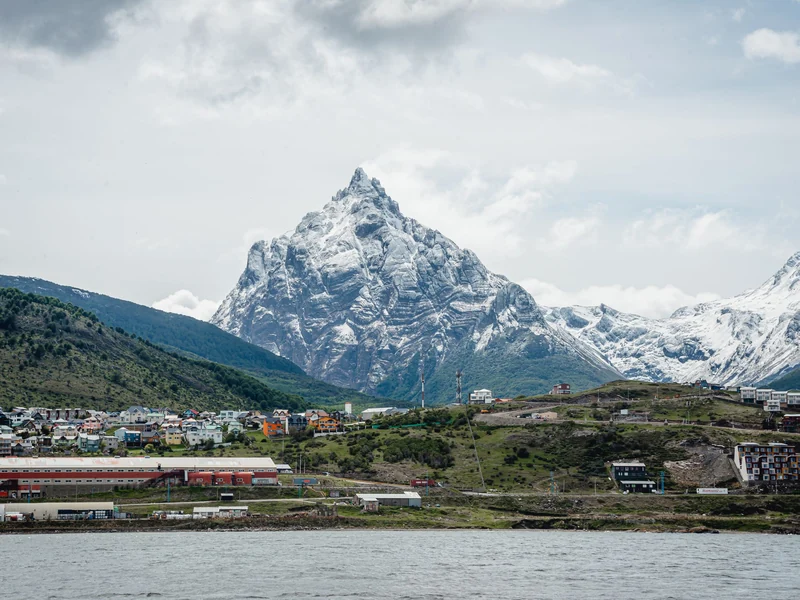
Monte Olivia nevado sobre la costa de UshuaiaUshuaiaBeds from ≈ US$ 20

The city at the end of the world, between the Fuegian Andes and the Beagle Channel: Tierra del Fuego National Park, the Martial Glacier and Laguna Esmeralda are close by. Sleeping and eating cost more than in the north.

See hostels and how to get there →
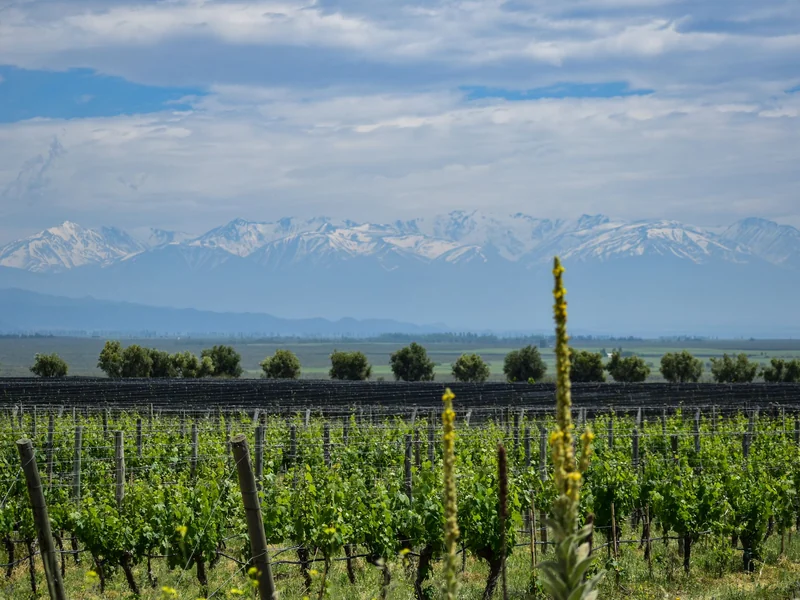
Hileras de viñedos verdes frente a la cordillera nevada en MendozaMendozaBeds from ≈ US$ 10

The wine capital and the gateway to the highest mountains in the Americas: Maipú wineries by bike, Aconcagua Provincial Park and buses to Santiago de Chile over the Cristo Redentor Pass.

See hostels and how to get there →
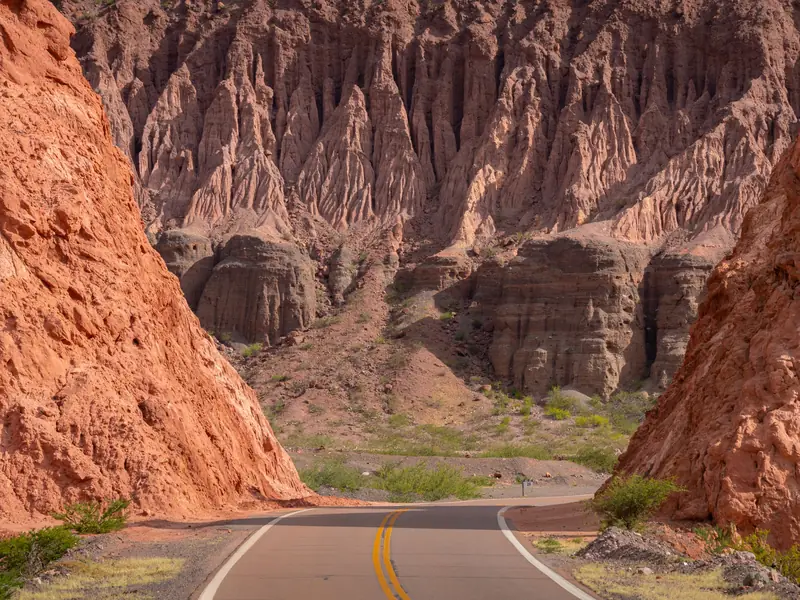
Ruta entre paredes de roca roja en la Quebrada de las ConchasSaltaBeds from ≈ US$ 8

The big base for the Northwest: a colonial old town, folk music bars (peñas) on Calle Balcarce and buses to Cafayate, Cachi, the Quebrada de Humahuaca and San Pedro de Atacama, in Chile.

See hostels and how to get there →
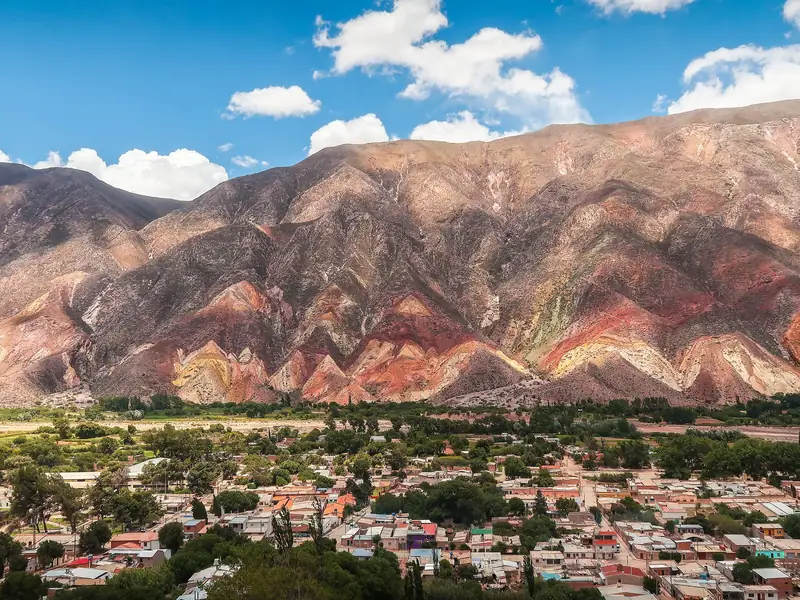
Cerros multicolores sobre un pueblo de la Quebrada de HumahuacaQuebrada de HumahuacaBeds from ≈ US$ 10

Colourful hills and small villages between 2,300 and 3,000 m, a UNESCO World Heritage Site. Based in Tilcara, the buses along Route 9 (RN 9) drop you in Purmamarca or Humahuaca in under an hour.

See hostels and how to get there →
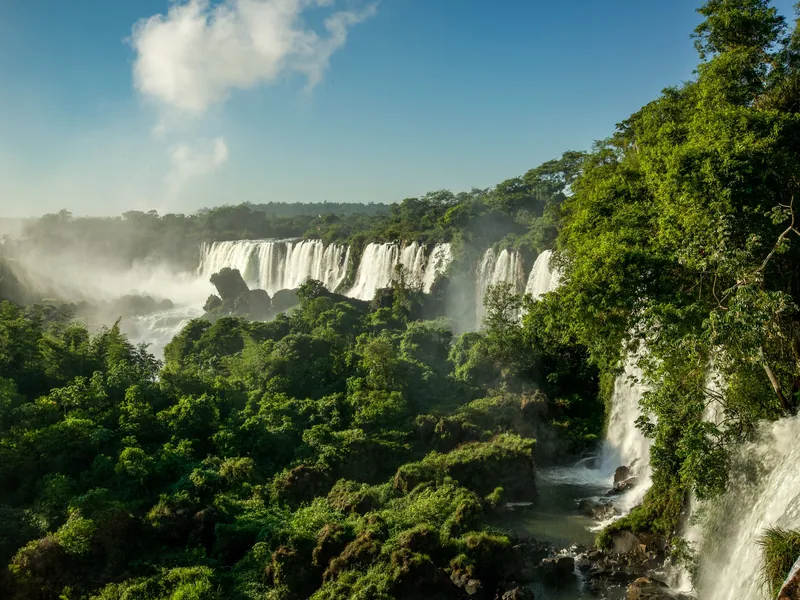
Cataratas del Iguazú cayendo entre la selva bajo cielo azulPuerto IguazúBeds from ≈ US$ 11

The base for the Iguazú Falls: the National Park entrance is about 17 km away and you can cross to the Brazilian side as a day trip. Many hostels have a pool, which is key in the jungle heat.

See hostels and how to get there →
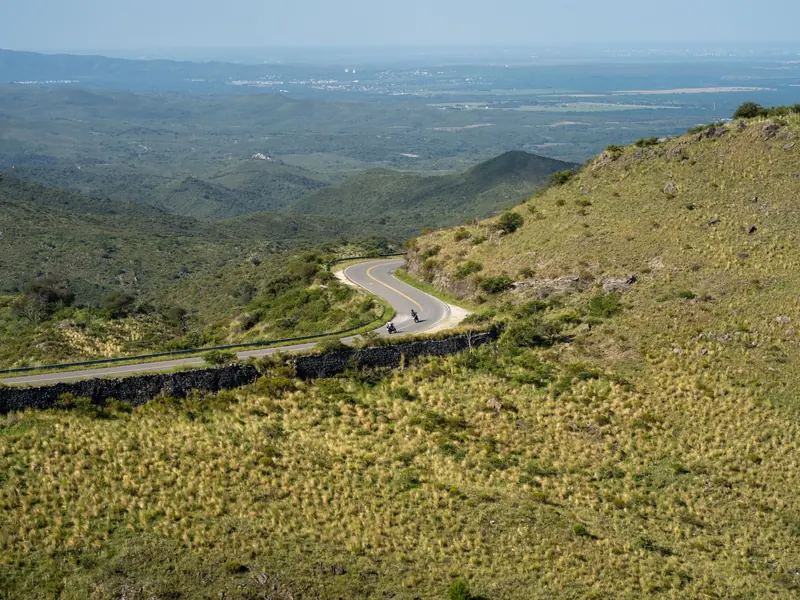
Camino de montaña serpenteando entre las Sierras de CórdobaCórdoba and Capilla del MonteBeds from ≈ US$ 10

A university city with the Jesuit Block and the nightlife of Güemes and Nueva Córdoba; about 2 h 40 away by bus, quiet and cheap Capilla del Monte sits at the foot of Cerro Uritorco.

See hostels and how to get there →
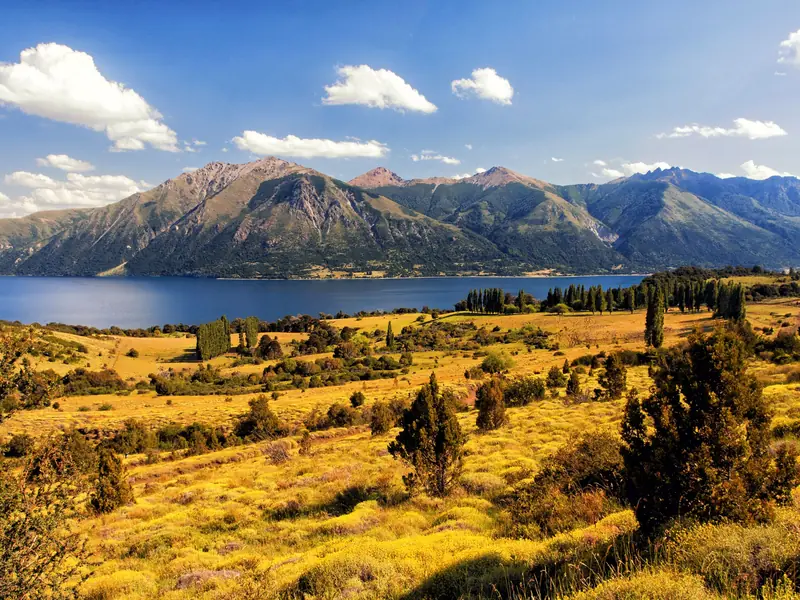
Lago y montañas con pastizales dorados cerca de San Martín de los AndesSan Martín de los AndesBeds from ≈ US$ 22

A small town on the shores of Lake Lácar, at the northern end of the Seven Lakes Route: beaches and a boat to Quila Quina in summer, skiing at Cerro Chapelco in winter and buses to Pucón (Chile).

See hostels and how to get there →

The 11 destinations on the map

Tap a destination to go to its guide.

Loading the map…
Travel

Backpacker routes: buses and flights between destinations

LegKmBy busBy plane
Buenos Aires → Córdoba6978 h 15-9 h 45 · Flechabus, General Urquiza, Chevallier and others · ≈ US$ 29-56≈ 1 h 30 · Aerolíneas and JetSMART
Buenos Aires → Mendoza1,04513 h 25-17 h · Andesmar, CATA, Chevallier and others · ≈ US$ 84-118≈ 2 h · Aerolíneas and JetSMART
Buenos Aires → Salta1,44721 h 30-25 h · La Veloz del Norte, Flechabus, Balut and others · ≈ US$ 68-103≈ 2 h 15 · Aerolíneas and JetSMART
Buenos Aires → Puerto Iguazú1,27417-18 h 45 · Crucero del Norte, Río Uruguay and La 20 de Junio · ≈ US$ 31-107≈ 1 h 55 · Aerolíneas and JetSMART
Buenos Aires → Bariloche1,57021-25 h · Chevallier, Vía Bariloche and Vía TAC · ≈ US$ 106-163≈ 2 h 25 · Aerolíneas and JetSMART
Buenos Aires → El Calafate2,551no direct bus: ≈ 42-44 h with changes≈ 3 h 20 · Aerolíneas and JetSMART
Buenos Aires → Ushuaia≈ 3,045no direct bus≈ 3 h 40 · Aerolíneas and JetSMART
Bariloche → San Martín de los Andes158-188≈ 3 h 40-3 h 55 · Albus and Vía TAC · ≈ US$ 20-36—
Bariloche → Mendoza1,209-1,241≈ 18 h 30-19 h · Andesmar, CATA and Flecha Bus · ≈ US$ 52-114Aerolíneas and JetSMART
El Calafate → El Chaltén215≈ 3 h · Cal-Tur, Chaltén Travel and TAQSA · ≈ US$ 32-38—
Ushuaia → El Calafate≈ 907≈ 17 h 30 with a change in Río Gallegos · Taqsa/Marga · ≈ US$ 1141 h 20-1 h 45 · Aerolíneas
Mendoza → Salta1,251-1,290≈ 18-20 h · Andesmar, CATA, Flecha Bus, 20 de Junio and othersAerolíneas and JetSMART
Salta → Tilcara (Quebrada)175-200≈ 3 h 45 · Balut and Andesmar—
Córdoba → Salta850-86612 h 30-14 h · Andesmar, 20 de Junio, Balut, La Veloz del Norte and others · from ≈ US$ 37Aerolíneas and JetSMART

Itineraries that work

The north in 2 weeks: Salta, the Quebrada and Mendoza

Fly to Salta (≈ 2 h 15 from Buenos Aires) and give it 4 or 5 days: the city, Cafayate via the Quebrada de las Conchas and Cachi via the Cuesta del Obispo. Carry on by bus to Tilcara (≈ 3 h 45 with Balut or Andesmar) and base yourself there for 4 days: the buses along Route 9 take you to Purmamarca and Humahuaca, and you acclimatise along the way before going up to the Hornocal. Head back to Salta and cross to Mendoza by bus (≈ 18-20 h) or by plane for 3 or 4 days of wineries by bike and mountains; from there it's ≈ 2 h by plane or 13-17 h by bus to Buenos Aires.

Southern Patagonia in 12 days: El Calafate, El Chaltén and Ushuaia

Fly from Buenos Aires to El Calafate (≈ 3 h 20) and catch the bus to El Chaltén right at the airport: every departure stops there. Stay 4 days in El Chaltén to leave room for the clouds over Fitz Roy, go back to El Calafate (≈ 3 h) and spend 3 days on the Perito Moreno Glacier. From there, fly to Ushuaia (1 h 20-1 h 45 with Aerolíneas) for 3 or 4 days of the National Park and the Beagle Channel, and fly back to Buenos Aires in ≈ 3 h 40.

The classic in 3 weeks: Buenos Aires, Iguazú, Bariloche and San Martín de los Andes

Start with 4 days in Buenos Aires and take the overnight bus to Puerto Iguazú (17-18 h 45) or the ≈ 1 h 55 flight. 2 or 3 days are enough for the falls: if you go back to the park the next day, the second entry is half price, and you can cross to the Brazilian side as a day trip. Return to Buenos Aires and fly to Bariloche (≈ 2 h 25) for 5 or 6 days of lakes and trails; carry on by bus to San Martín de los Andes (≈ 3 h 40-3 h 55), stay 2 or 3 days and fly back to Buenos Aires from Chapelco airport.

Plan

Money, exchange and paperwork for backpackers

1No more «blue» exchange rate

These days the official dollar, the MEP rate and the blue rate are within 1 % of each other, so changing money «at the blue rate» no longer gives you an edge. This guide converts at AR$ 1,540 = US$ 1. Avoid the street money changers («arbolitos») on Calle Florida because of the risk of fake notes: change money at banks or exchange offices.

2Foreign cards

Purchases with a card issued abroad are settled at the MEP exchange rate, practically the same as the official one; this doesn't apply to ATM withdrawals. Some hostels add a surcharge if you pay by card or only take cash: check the final price and the currency before you pay.

3VAT-free accommodation for foreigners

Foreign tourists don't pay the 21 % VAT on accommodation, including at registered hostels, if they show their passport and the immigration entry record and pay with a foreign card or a transfer from abroad. It doesn't apply if you pay in pesos or with an Argentine card: ask the hostel how they apply it before you pay.

4Cash and ATMs

Many hostels outside Buenos Aires only take cash, for example in San Martín de los Andes, Salta, Córdoba, Ushuaia and El Calafate. ATMs charge foreign cards up to ≈ US$ 10 per withdrawal, with low limits, and they're scarce: El Chaltén has just one, which runs out of notes in high season; the same happens in El Calafate, and in the Quebrada they empty out on long weekends.

5Western Union

One alternative is to send money to yourself and collect it in pesos at a branch: there are agents in Bariloche, El Calafate and Puerto Iguazú, among others. Factor the fee into your sums and don't change money at the Ezeiza and Aeroparque offices, where the rate is less favourable.

6SUBE card and local transport

The SUBE card works on buses and the metro (subte) in Buenos Aires and in several other cities; in Bariloche the buses don't take cash. On the Buenos Aires metro, and in Mendoza, Córdoba and San Martín de los Andes, you can also pay by contactless card, and Salta uses its own card, SAETA. In Buenos Aires the metro costs ≈ US$ 1.20 with a registered SUBE card and ≈ US$ 1.65 with an unregistered one.

7Safety: what the official advice says

The British and Canadian governments advise care in Buenos Aires with phone snatching, thieves on motorbikes (motochorros) and the «mustard stain» trick, especially at the Retiro bus station, Calle Florida, San Telmo, Palermo and La Boca, where it's best not to stray from Caminito. At Ezeiza, only take official taxis and, in the city, use a radio taxi rather than hailing one on the street.

Ride apps: Uber, Cabify, DiDi and BA Taxi

In the big cities (Buenos Aires, Córdoba, Mendoza, Salta and Bariloche) ride-hailing apps work and usually come out cheaper than the airport taxi; in southern Patagonia, the Quebrada, Iguazú and San Martín de los Andes there are hardly any, and there people use a remís (minicab), a taxi or the bus. These are the apps that work in Argentina, with their official links.

Uber

The most widely used in the country: Buenos Aires, Córdoba, Mendoza, Salta and Bariloche. It takes card, cash and Mercado Pago, and the same account you use at home works here.

Cabify

Strong in Buenos Aires; also in Córdoba, Mendoza and Bariloche. Cash only in Buenos Aires, Rosario, Mendoza and Córdoba; to create an account it asks for a phone number and email address.

DiDi

Works in Buenos Aires, Córdoba, Salta, Bariloche and other cities (not in Mendoza). You pay by card or in cash.

BA Taxi

The official app for taxis in the City of Buenos Aires: it estimates the fare using the official rate table, shows the number plate and the driver, and you pay by card or Mercado Pago. It works within the capital (including Aeroparque, not Ezeiza).

1Pay in pesos

The apps show the price in Argentine pesos. If, when paying with a foreign card, you're offered the charge in your own currency, travel guides recommend choosing pesos.

2Mobile data

To request a car you need internet: a prepaid SIM from Personal, Claro or Movistar (activated with your passport) or an eSIM. Cabify asks for a phone number and email address to create the account.

3Cash works

Uber and DiDi accept cash in Argentina; Cabify, only in Buenos Aires, Rosario, Mendoza and Córdoba (and never for advance reservations).

4Check the car

Before getting in, check the number plate, model and driver's photo. All three apps let you share the trip live and have an emergency button; Cabify adds a 4-digit PIN.

5Ezeiza: where to get picked up

Cabify picks up at gate I, at the far end of the former terminal A; Uber and DiDi, at the bay opposite, across the road. Uber reports an average of ≈ US$ 20 to the city; the official taxi charges ≈ US$ 32 at the desk (≈ US$ 23 reserving on its website).

6Where there are no apps

In El Calafate, El Chaltén, Ushuaia, the Quebrada, Iguazú and San Martín de los Andes the apps don't operate or aren't authorised: count on the airport remís or taxi, shuttles or the bus (each guide explains how).

When to go to each region

RegionBest timeWatch out for
Southern Patagonia (El Calafate, El Chaltén, Ushuaia)Nov-MarThis is when there are the most buses and flights, with 16 to 17 hours of daylight; hostels and buses fill up, so it's worth reserving ahead. The wind blows hard from October to February. From May to September most businesses in El Chaltén close and buses from El Calafate drop to about 2 a day; Ushuaia has a second season in winter, with skiing at Cerro Castor.
Northern Patagonia (Bariloche, San Martín de los Andes)Dec-Mar and Jul-AugThere are two high seasons: trekking season, with the Frey and Otto Meiling refugios open from December to April and the driest weather of the year, and snow season, with Cerro Catedral and Chapelco. May and June are the wettest months. In winter the Seven Lakes Route can be closed by snowfall and require chains, and from June to January Argentine school-leavers' trips fill the centre of Bariloche.
Cuyo (Mendoza)Apr-May and Oct-NovThese months are mild with little rain; from December to February highs are around 31-33 °C and hostels open their pools. The day trek to Confluencia, on Aconcagua, runs from 15/11 to 10/4. In winter the Cristo Redentor Pass to Chile has reduced hours and closes for snow or ice.
Northwest (Salta and the Quebrada de Humahuaca)Apr-May and Sep-OctDry with mild days: the best time for the Puna, the Hornocal and hiking. From December to March it rains heavily (197 mm in January in Salta), although that's when the Tilcara Carnival takes place, with hostels filling up and raising prices. July, with the winter school holidays, brings heavy demand for buses and sub-zero nights in Humahuaca.
Litoral (Puerto Iguazú)Mar-May and Sep-NovMore bearable temperatures (highs of 24-30 °C), although October is the wettest month. In summer it's 31-32 °C and very humid, and the falls carry more water; July, January, February and long weekends are high season. The park is open every day of the year, but floods can close the Devil's Throat (Garganta del Diablo), as happened in August and September 2026.
Buenos Aires and CórdobaMar-May and Sep-NovIn Buenos Aires summer is hot (highs of 29-30 °C) and winter is cool (15-16 °C); autumn and spring are mild for walking around the city. In the Córdoba hills, January and February are high season and the wettest, with storms; May to August is dry with cold nights. For hiking in Capilla del Monte, March-April and September-November are best.

Plan the rest of your trip

Tours and activities in Argentina

Boat trips in front of the glaciers, the Iguazú Falls, wineries by bike and the Quebrada: the most booked activities in the country.

Frequently asked questions

How much does a hostel bed cost in Argentina?
It depends on the destination and the season. El Calafate, El Chaltén and Ushuaia are expensive for Argentina, and in Ushuaia sleeping and eating cost more than in the north. Each guide shows the dorm bed rate for every hostel, in US$. To save money, choose hostels with a kitchen and, if you're from abroad, pay with a foreign card to avoid the 21 % VAT.
Is it better to travel by bus or by plane?
For one-night legs, like Buenos Aires–Córdoba (8 h 15-9 h 45) or Buenos Aires–Mendoza (13-17 h), the overnight bus is comfortable and saves you a night in a hostel. Over long distances the plane wins: Buenos Aires–Bariloche is 21-25 h by bus against ≈ 2 h 25 by air, and there's no direct bus to El Calafate or Ushuaia. Domestic flights are run by Aerolíneas Argentinas and JetSMART.
Do I need to book my hostel in advance?
In high season, yes. In Ushuaia hotel occupancy tops 90 % in January and February, in El Chaltén hostels and buses fill up from December to March, and in Tilcara the Carnival fills the hostels. Book mountain refugios and campsites ahead too, and let them know your arrival time: many hostels close check-in between 10 pm and midnight.
Do I need to carry cash?
Yes. Many hostels outside Buenos Aires take cash only, and in places like El Chaltén, with a single ATM, or the Quebrada de Humahuaca, the ATMs run out of notes in high season or on long weekends. Bring pesos from the previous city. Watch out for the opposite too: the National Park entry in El Chaltén can only be paid by card, online or by QR code.
Is it safe to backpack around Argentina?
Official travel advice focuses on Buenos Aires: phone snatching, thieves on motorbikes (motochorros) and the «mustard stain» trick, with extra care at the Retiro bus station, Calle Florida, San Telmo and La Boca outside Caminito. Canada advises a high degree of caution in the metropolitan area. Bring a padlock for the locker, keep your phone out of sight on the street and use official taxis or radio taxis.
What's the best time for a backpacking trip around Argentina?
It depends on the region. Southern Patagonia is best from November to March; Bariloche and San Martín de los Andes have trekking in summer and skiing in winter; the Northwest is best in autumn and spring, away from the December-to-March rains; Iguazú and Mendoza are more bearable outside summer. If you want to cover several regions, October and November fall in the shoulder season almost everywhere.
Transparency: this is an independent guide; we are not the official website of any hostel. If you book through our links we may earn a commission, at no extra cost to you.